
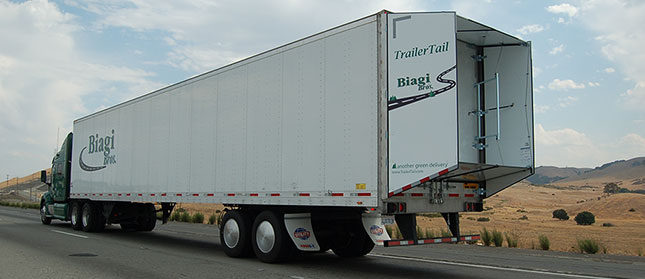
A new white paper led by Pollution Probe and the International Council on Clean Transportation, and funded by Environment Canada, examines the costs, performance levels, and current adoption rates of GHG reducing technologies for trailers in the Canadian on-road freight sector. The white paper is intended to help inform policymakers and the Canadian trucking industry on the types of technology available and how it’s being used; as well as where regulations need to be amended in order to facilitate the free flow of this equipment from coast-to-coast.
Key points covered in the report:
- Adoption of aerodynamic devices based on economics, the real-world payback is typically 12 to 18 months for most technologies.
- Side skirts have the largest adoption rate on box type trailers, with uptake of underbody, rear-end, and gap reduction devices lagging behind.
- There is widespread utilization of conventional-size low rolling resistance tires, wide-base singles continues to lag.
- The report also found a common thread of feedback from across the trucking industry regarding differences in size and weight restrictions from province to province and the problem this creates for spec’ing their equipment. Furthermore, it seems that the penetration of boat-tails and WBS tires remains marginal due to provincial and territorial restrictions. For boat-tails, the situation is likely to change nationally over time with the inclusion of boat tails in the national memorandum of understanding on weight and dimensions, however the majority of jurisdictions in Canada continue to impose weight penalties on WBS tires with policy change time-frames unclear.
In addition to specific information on the issues above, the report offers a host of other information carriers may find interesting, including adoption rates for other technologies and rough timeframes for cost recovery.
To read the report, click here.
