Plan includes 24/7 enforcement, and stronger carrier oversight
Building on joint momentum to strengthen Canada’s supply chain, the Canadian Trucking Alliance (CTA) has proposed a proactive collaboration with the Council of Ministers Responsible for Transportation and Highway Safety to upscale proven provincial safety initiatives into unified, pan-Canadian standards.
In a letter to the Council, the CTA commended Canada’s transportation ministers for their ongoing leadership in dismantling internal trade barriers and tackling the « Driver Inc. » labour misclassification model. To accelerate this progress, the CTA is inviting the Council, Deputy Ministers, and the Canadian Council of Motor Transport Administrators (CCMTA) to establish a structured, government-industry review process that turns successful regional pilots into turn-key national frameworks.
The CTA Board of Directors highlighted two immediate opportunities to advance this shared safety agenda:
As British Columbia and the industry collaborate on a regulatory framework for forward-facing cameras in heavy commercial vehicles, the CTA is urging the Council to use B.C.’s initiative as a pilot. By proactively gathering pan-Canadian insights from government and industry stakeholders, Canada can establish a national standard that prevents regulatory friction and internal trade barriers before they take root.
« B.C.’s work on forward-facing cameras is an excellent foundation, but safety regulations shouldn’t stop at provincial borders, » said Dave Earle, President and CEO of the BC Trucking Association (BCTA). « A 12-month joint working group will allow us to take the great work happening on the ground in British Columbia and seamlessly upscale it into a turnkey national standard. This proactive approach ensures our drivers face clear, unified rules everywhere they operate across the country. »
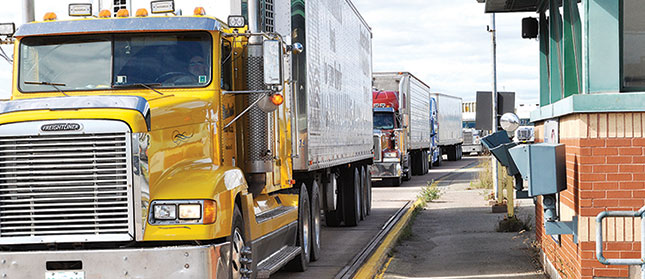
To protect compliant carriers and road users, the CTA advocates a shift from reactive oversight to continuous, proactive enforcement, including working toward 24/7 operations at truck inspection stations to prevent non-compliant operators from bypassing closed scales. Furthermore, to support the ministers’ excellent work on an integrated national truck safety database, the CTA calls for a plan to eliminate the concerns with oversight blind spots linked to the « Satisfactory Unaudited” safety rating category – ensuring the database is powered by verified operational data, given that over 80 percent of Canadian fleets have never undergone an on-site safety check.
To rapidly execute these priorities, the CTA and its provincial association partners are proposing the creation of a joint government-industry working group with a focused 12-month mandate to design the operational frameworks needed to resolve the « Satisfactory Unaudited » data gap and seamlessly align B.C.’s forward-facing camera rollout nationwide.
« Our message to the Council of Ministers is clear: we must sustain our momentum and build directly on the significant progress we have already achieved together, » said Scott Tilley, the newly appointed Chair of the Canadian Trucking Alliance (CTA). « By collaborating to transition toward 24/7 roadside enforcement and resolving the ‘Satisfactory Unaudited’ concerns, we protect compliant carriers, eliminate the unfair playing field exploited by non-compliant operators, and fundamentally make Canada’s highways safer for everyone. »