
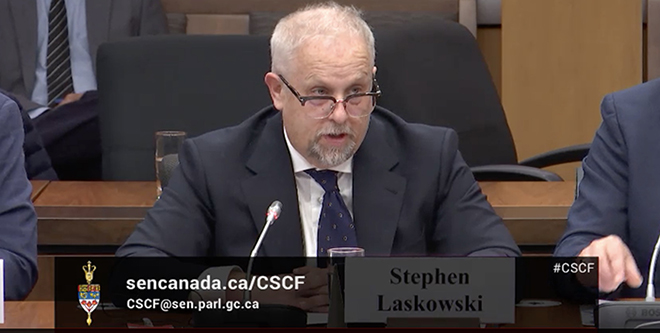
In welcoming Bill C-39, the Building Canada Strong Act, Canadian Trucking Alliance (CTA) President and CEO Stephen Laskowski urged lawmakers to ensure the bill delivers on its commitment to protect transportation workers on the road and at the border.
Appearing before a Senate committee on Bill C-39, Laskowski outlined three priorities to maximize the bill’s impact:
Real-World Labour Enforcement & Workforce Balance
Laskowski commended Minister Patty Hajdu’s leadership and welcomed Bill C-39’s new digital enforcement tools targeting wage theft and worker misclassification (“Driver Inc.”), noting they must be backed by three practical steps:
• Proactive ESDC Enforcement: Replace slow, reactive audits with real-time intervention. In Employment and Social Development Canada’s (ESDC) Southern Ontario blitzes, 25 percent of audited carriers vanished after their first inspection and re-incorporating under new names to evade penalties.
• Enhanced Vetting for Companies: Support targeted access to foreign drivers strictly through a “Known Employer” model under the Temporary Foreign Worker Program, ensuring compliant fleets can recruit safely while non-compliant operators are locked out.
• Balancing Paid Medical Leave: Finding balance for paid sick leave, supporting genuinely ill workers while addressing operational capacity strain. Full utilization of the 10-day federal leave across Canada’s 320,000 long-haul drivers removes over 12,000 trucks from highways annually – a cost absorbed by law-abiding fleets while Driver Inc. operators bypass obligations and deprive drivers of statutory benefits.
Commercial Trade Corridor Infrastructure
The CTA endorsed Bill C-39’s streamlined project approvals and intergovernmental coordination, noting they complement Budget 2026 gateway investments. Laskowski urged Ottawa to treat highways, border crossings, ports, and intermodal hubs as a national priority and give trucking a seat on the proposed National Trade Corridors Council.
Digital Border & Trade Modernization
Highlighting the alignment between Bill C-39 and Budget 2026 funding for Transport Canada and the Canada Border Services Agency (CBSA), Laskowski noted the CTA’s role on the federal Trade Digitalization Task Force to advance a “Tell Us Once, Tell Us Digitally” framework – eliminating paper redundancies and keeping cross-border freight moving.
“CTA supports the direction of Bill C-39 and the objectives behind it,” said Laskowski. “The ultimate measure of success will be straightforward: less congestion at our borders, stronger highway infrastructure, a more reliable national supply chain, and rigorous enforcement that ensures every carrier in Canada competes by the exact same rules.”
CTA represents about 5,000 carriers employing 250,000 Canadians. The trucking industry underpins Canada’s domestic and cross-border supply chains.
