By Greg Arndt, Chairman, Canadian Trucking Alliance
The Following appeared in TodaysTrucking.com:
The Canadian Trucking Alliance has successfully turned a critical corner in efforts to combat the illicit Driver Inc. model and enforce government compliance against systemic tax evasion and worker exploitation. By securing targeted federal funding commitments, removing the T4A enforcement moratorium, and establishing cross-jurisdictional frameworks, our industry has laid a powerful corporate foundation to restore law and order. However, fully eradicating these predatory practices requires a few final steps to finish the job.
When I assumed the role of Chair two years ago, I knew our sector was facing a pivotal structural challenge where fair competition, highway safety, and basic labour standards were under severe pressure. Today, our professional mission remains clear: we must maintain this momentum and see the work through to fully restoring structural accountability across Canada’s transportation sector.
Some observers could suggest that describing this systemic challenge as a battle is a mischaracterization. However, after two years of leading this alliance, I can state with absolute clarity that it is precisely that. We are witnessing the emergence of an underground element within our own industry, which is actively seeking to undermine and displace law-abiding, compliant carriers. This parallel market operates on a business model designed to bypass the regulatory boundaries designed to govern us all. I have seen this firsthand throughout my tenure as chair. This threat must be treated with the highest level of professionalism, while recognizing its full scale and gravity. Ultimately, this is a battle over the future of our sector and the fundamental rules of fair market competition in Canada.
Our multi-stage timeline designed to reestablish true law and order began over 24 months ago with structured advocacy in Ottawa, culminating in the landmark Standing Committee on Transport, Infrastructure and Communities (TRAN) hearings. During those sessions, the Alliance and expert witnesses were nearly unanimous in exposing the systemic lawlessness affecting our sector.
We provided evidence that driver misclassification is the root cause of widespread safety failures, corporate tax evasion, and labour abuse and non-compliance across the country. That allowed us to advance our objectives deeper into the regulatory framework, securing a federal budget commitment of $77 million over four years to dismantle the scheme. This funding directly empowered the Canada Revenue Agency (CRA) to target the misuse of Personal Services Business designations. Sequential to that legislative milestone, our next breakthrough occurred when the CRA officially lifted its long-standing T4A enforcement moratorium, introducing real financial penalties for non-compliant networks.
True compliance, however, requires synchronization across federal departments. Following these initial tax adjustments, Minister Patty Hajdu reinforced the government’s regulatory mandate to CTA by committing to deploy rigorous enforcement measures against labour misclassification. This directly resulted in expanding the reciprocal Information-Sharing Arrangement between the CRA and the Labour Program at Employment and Social Development Canada (ESDC).
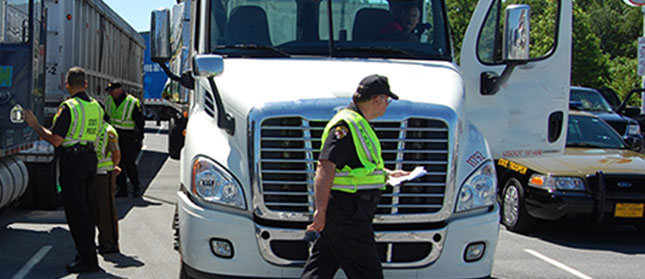
Over the last 24 months, we have watched federal agencies significantly escalate their presence on the ground. Joint task forces and ramped-up field audits are no longer distant policy concepts; they are an active, growing reality for non-compliant networks as federal inspectors systematically coordinate their data.
With this heightened federal framework secured, we shifted our focus to aligning our provincial partners. At the Council of Ministers Responsible for Transportation and Highway Safety, Federal Transport Minister Steven MacKinnon joined provincial leaders in a unified pledge to collaboratively combat Driver Inc. His commitment to coordinated action laid the groundwork for an all-hands approach to truck safety and regulatory oversight. Over my tenure, the work at provincial scales has truly intensified. Provincial ministries and workers’ compensation boards have steadily moved past individual silos, escalating localized enforcement blitzes to identify bad actors at provincial inspection scales and apply penalty structures against them.
This brings us to our current phase: marching towards our final objective. Following extensive consultations with CTA leadership, the Canadian Council of Motor Transport Administrators (CCMTA), alongside the Council of Transportation Deputy Ministers and Labour authorities, has formally committed to bringing forward a unified, comprehensive national enforcement plan to tackle Driver Inc. this fall. This would deliver the cross-jurisdictional architecture we have fought for – a structural overhaul updating National Safety Code standards to systematically eliminate the gaps that non-compliant operators exploit. Fleets that cut corners on their tax obligations typically do the same throughout all their operations – including vehicle maintenance and electronic logging device compliance. This plan is not simply an economic or regulatory issue, but a matter of public safety and, ultimately, life and death.
It was incredibly difficult to establish our position against these entrenched practices, but we are now advancing toward a landscape of real solutions and political alignment we have spent years trying to achieve. As we approach this critical window, the industry is awaiting the final recommendations from the TRAN Committee that is expected to detail how the government plans to finalize corrective measures against Driver Inc.
Crucially, this push aligns with three massive federal battlegrounds this fall. First, upcoming Transport Canada security consultations coincide directly with the CTA’s aggressive drive to overhaul border security protocols. We are demanding strict new frameworks to stop the flow of contraband being smuggled across our borders, and within our supply chains and illicit networks.
Second, concurrent forced labour consultations led by ESDC provide the perfect launchpad for our next major directive: the CTA is calling for an absolute end to non-compliant carriers having any access to foreign labour pools.
Thirdly, the intense scrutiny at parliamentary hearings regarding the integrity of federal supply chains, helped CTA secure a public commitment from Canada Post leadership that it will not do business with fleets engaged in exploitative practices, and the CTA is now actively collaborating with Canada Post to implement enhanced carrier vetting frameworks to ensure Driver Inc. is completely locked out of their supply chain.
However, we must have clear eyes about the pushback we face. The operators and protectors of the Driver Inc. model are not retreating quietly. They possess considerable political capital and are actively lobbying Ottawa and the provinces, attempting to muddy the waters, dilute regulations, and mischaracterize our message. They are spending significant resources fighting our objectives because they want to protect an illicit system that pads their pockets at the expense of human dignity and public safety.
This political leverage is precisely why we cannot falter now. Responsible, law-abiding carriers and courageous politicians across Canada must continue to step up and join our cause to counter this highly coordinated resistance.
Let me be unequivocally clear about our expectations. There is absolutely no room for more delays, half-solutions; no space for “soft enforcement”, and the time for “educational periods” is long gone. The industry demands strict, unyielding enforcement of the rules as they’re written on all operators.
Looking back over these two fast-paced years, I am incredibly proud of how far we have marched. We have moved from identifying the problem in parliamentary hearings to securing $77 million in funding, aligning federal ministers, bringing major Crown corporations to the table, and finalizing a national fall execution plan with the CCMTA. Tough days and complex challenges still lie ahead of us, but we possess undeniable momentum. The commitments made by Minister Hajdu, Minister MacKinnon, and our public and private partners must be fully operationalized.
To the shippers who choose compliant carriers, and to the thousands of honest truck drivers who keep our economy moving, your resilience keeps us marching toward progress. We are advancing with purpose. We will not stop until fair competition, safety, and the rule of law prevail on every highway across Canada.